

Dr. Slawek Wojtowicz is a Polish-born American physician, author, and artist. Growing up in communist-era Poland shaped his understanding of liberty and the American flag.
The Flag: A Promise Between Generations
Reflections on freedom, sacrifice, and the sacred duty of belonging
1. What does the American flag mean to you?
It means sacrifice. The sacrifices of people whose names we may never know, whose graves we may never visit, and whose dreams became the freedoms we enjoy today.
A flag is a curious thing. A piece of cloth, a few colors, some stars. Yet men have died protecting it, mothers have wept beneath it, and generations have looked toward it with hope.
To me, the American flag represents a promise made by the dead to the living: We gave you freedom. Please do not squander it.
I was born in Poland, a country that learned the price of freedom through centuries of suffering. Perhaps that is why I understand the American flag differently from those who have never lived without liberty.
Freedom is like air. We seldom notice it until someone takes it away.
2. Was there a moment when the flag took on special meaning?
Yes. When Poland regained its freedom after decades of communist domination.
Poland’s Solidarity movement helped set in motion the collapse of Soviet communism in Eastern Europe. Suddenly, the impossible became possible. An empire built on fear began to crumble, and nations that had been ordered to kneel remembered how to stand.
And then something extraordinary happened.
The crown returned to the head of the Polish White Eagle.
The communists had stripped our national emblem of its crown, as though removing a small golden ornament could erase a thousand years of history.
But the eagle remembered.
And so did we.
That little crown meant more than gold. It meant dignity restored, sovereignty reclaimed, and the triumph of memory over tyranny.
I think of that moment whenever I see the American flag. America had been a beacon of freedom to millions trapped behind the Iron Curtain.
Sometimes a flag is not merely the symbol of a country.
Sometimes it is the light by which another country finds its way home.
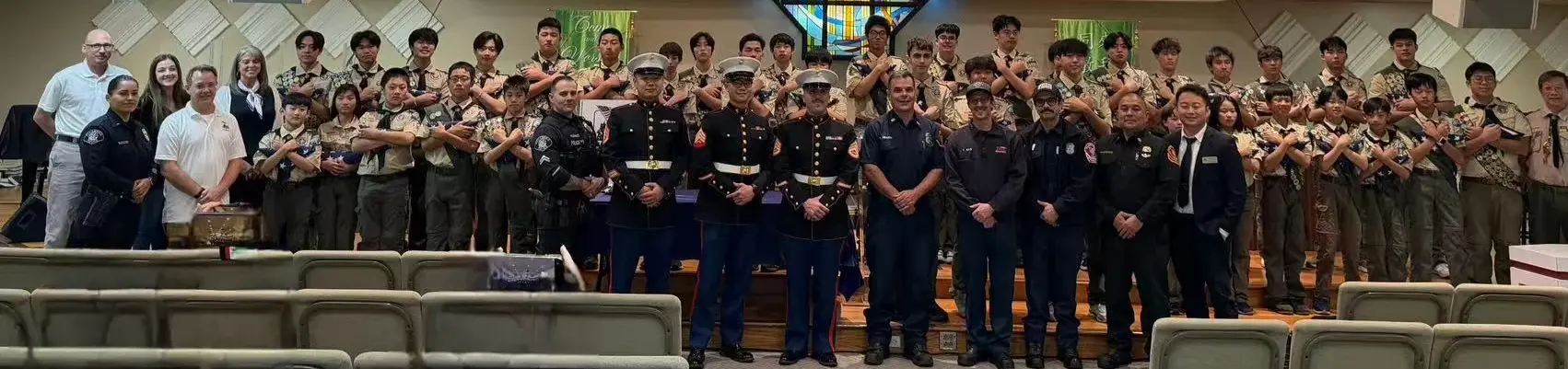
3. What would you say to today’s young Scouts and JROTC cadets?
I would tell them that a flag is much older than the nation it represents.
Thousands of years ago, our ancestors gathered beneath their tribal standards. They hunted together, defended one another, shared their bread, and buried their dead. The standard meant belonging. It told every warrior that he was not alone.
In ancient battles, when the standard fell into enemy hands, an army could lose not only its courage but its very sense of being one people.
The flag was never merely cloth.
It was the tribe’s heart, carried high enough for everyone to see.
Today we have magnificent machines, artificial intelligence, and technologies our ancestors would have mistaken for magic. Yet we still need what they needed: loyalty, courage, brotherhood, and a willingness to protect one another.
The world ahead will demand these virtues again.
But remember something else. The strongest tribe is not the one that hates its neighbors. It is the one whose members care for one another so deeply that strangers wish to join them.
America’s greatness lies in its ability to make one people out of many.
Carry your flag proudly. But carry kindness with it. Courage without compassion is merely another form of brutality.
And never forget: the flag does not become sacred because we salute it. It becomes sacred because of how we treat the people who live beneath it.
4. What one message would you pass on to the next generation about honoring the flag?
Look to Poland.
Long before modern democracy became fashionable, the Polish-Lithuanian Commonwealth developed remarkable traditions of religious tolerance, parliamentary government, legal protections, and political liberty. Its freedoms were imperfect and far from universal, but many of its ideas were centuries ahead of their time.
Then came the catastrophe.
In the 1790s, three neighboring empires—Russia, Prussia, and Austria—finished dividing Poland among themselves. Our country disappeared from the map of Europe for 123 years.
Imagine that.
Your homeland erased. Your language suppressed. Your children taught that their nation no longer exists.
But the Polish flag survived in songs, in prayers, in secret classrooms, and in the hearts of mothers who taught their children the names of cities they might never see.
In 1918, Poland returned.
Only twenty-one years later, Nazi Germany and the Soviet Union invaded our country, bringing another age of terror, mass murder, and occupation.
Once again, the flag became something people could die for simply by raising it.
And still, it survived.
That is why the Polish flag is sacred to us. Not because its cloth is different from any other, but because it carries the memory of those who refused to surrender their country, even when their country no longer existed.
My message to young Americans is simple:
Do not wait until you lose your freedom to discover its value.
Honor your flag by defending the Constitution, protecting the weak, speaking the truth, respecting your fellow citizens, and refusing to surrender your conscience to anyone in power.
A nation is not destroyed only when foreign armies cross its borders. It can also perish quietly, when its people forget what made it worth defending.
The flag is a promise between the living, the dead, and those not yet born.
Our ancestors kept their part.
Now it is our turn.
Leave a Reply